
What You Need to Know About Oral Cancer
Did you know that nearly 60,000 Americans will receive an oral cancer diagnosis this year?
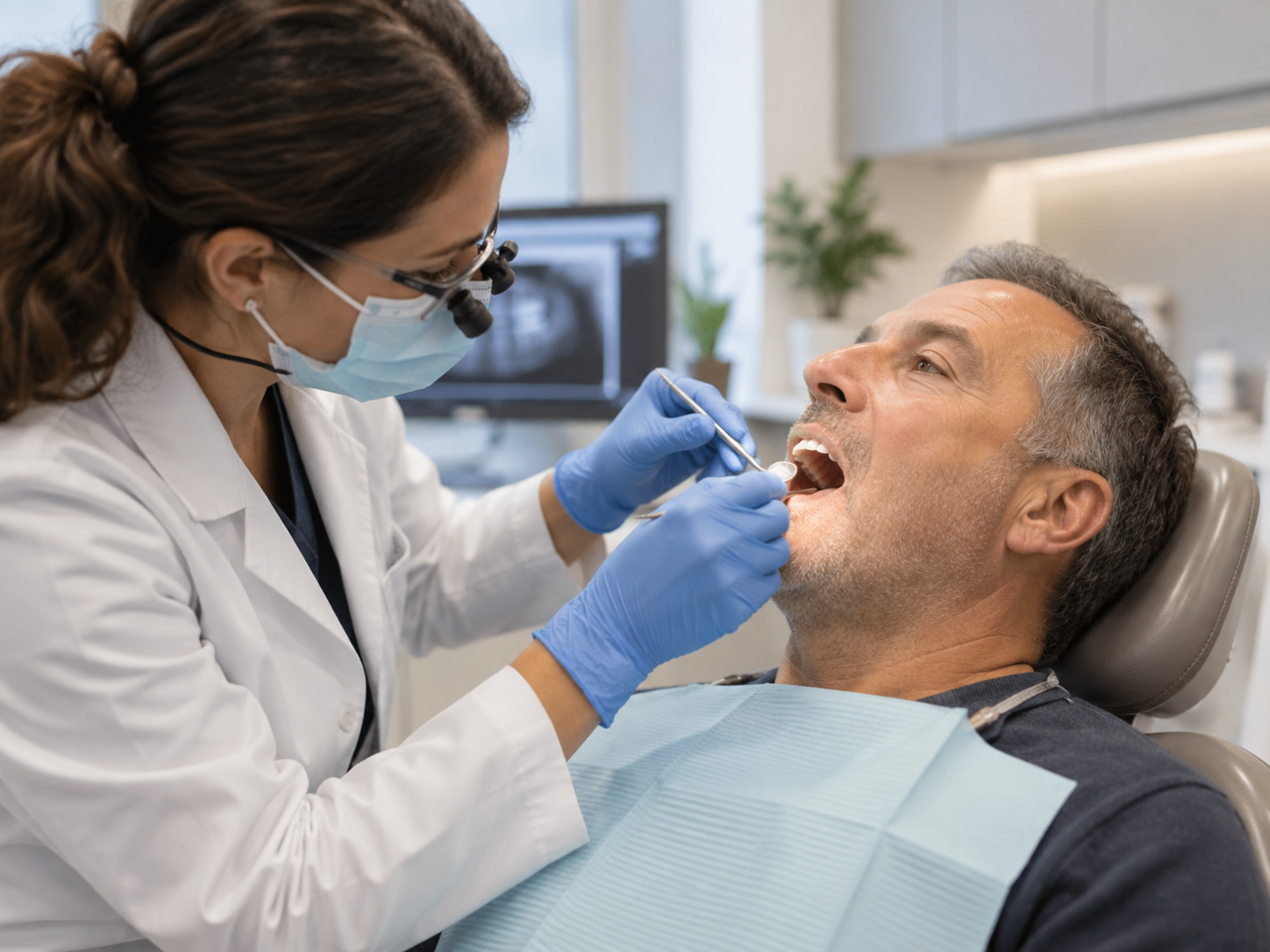
April is Oral Cancer Awareness Month, making it the perfect time to raise awareness about this serious condition and the importance of regular oral cancer screenings. Read on to learn about common risk factors, warning signs, and steps you can take to protect your health.
What is Oral Cancer?
Oral cancer is a disease that develops in the mouth, oral cavity, or throat. Over the past decade, oral cancer rates have been on the rise, making awareness and early detection more important than ever. When caught in the early stages, oral cancer has a survival rate of up to 90%. Treatment varies depending on the stage at diagnosis, but typically includes surgery, radiation therapy, chemotherapy, targeted therapy, or a combination of these approaches.
Dentists are often the first healthcare professionals to identify early signs of the disease, which is one of the many reasons regular dental visits are so important. Staying up to date with your preventive dental visits ensures that any concerning signs are caught and evaluated as early as possible.
Signs & Symptoms of Oral Cancer
At every preventive visit, your dental team screens for early signs of oral cancer. That said, changes in your oral health can develop between appointments, so knowing what to look for is an essential part of staying on top of your health.
If you notice any of the following symptoms lasting longer than two weeks, it is a good idea to give your dentist a call:
- An oral sore that will not heal
- Red or white patches on gums, inside of cheeks,or tongue
- Pain or tenderness inthemouthoronthelips
- A lump, thickening, or rough spot in the mouth
- Difficulty with oral functions, such as eating, speaking, or swallowing
- Changes in bite alignment
- Loose or ill-fitting dentures
- Feeling like something is caught in the throat
Noticing one or more of these signs does not necessarily mean something serious is wrong; many of these symptoms can have other causes. However, it is always worth checking in with your dentist so they can take a closer look. If any follow-up testing is needed, your dental team will help guide you through the next steps and connect you with the right care.
Risks of Oral Cancer
While less than 10% of oral cancer cases develop from an unidentified cause or genetic condition, most cases are associated with two main risk factors.
Tobacco & Alcohol Use: Both smoking and smokeless tobacco products, as well as regular alcohol consumption, have been strongly linked to oral cancer. Quitting or reducing these habits is one of the most impactful steps you can take to lower your risk.
Human Papillomavirus (HPV): Certain strains of HPV have been linked to oral cancers, making it another important risk factor to be aware of. Speaking with your primary healthcare provider about ways to reduce HPV risk is a great place to start.
Protect Your Health
Oral Cancer Awareness Month is a helpful reminder that staying informed and keeping up with regular dental visits are two of the most powerful tools for early detection. If it has been a while since your last preventive appointment, there is no better time to schedule one. Give our office a call today! Our team is committed to delivering compassionate care that puts your health first.
Pueblo del Sol Dental Blog